



With Cyclosporiasis cases across the U.S. hitting 10,468 laboratory-confirmed domestic cases since May 1, 2026, and 2 deaths already reported, rising grocery costs and growing food-safety fears have led health-conscious Americans to grow their own food.
That might mean planting in a backyard plot or setting up containers on a balcony. Many apartments offer neither option, so residents create mini gardens indoors.
why people are suddenly growing their own food
Buying food to eat at home has become 33% more expensive since 2019 according to the latest consumer price index (CPI). A household that spent $600 a month on groceries then could now pay about $800 a month—or more. Rising costs and concerns about where store-bought food comes from and how safely it was handled have encouraged some people to grow their own food.
What you can grow in your home this winter
Just like regular outdoor gardening has its do’s and don’ts, so does gardening inside. You don’t need to try a long list of plants before finding the right ones for your home.
Mint, chives, parsley, lemon balm, spinach, loose-leaf lettuce, microgreens, arugula and kale are reliable in lower light. Basil, cilantro, rosemary, thyme, oregano and dill usually need more light, either from a bright window or grow lights.
As the weather changes during the colder, frostbite months, it’s still possible to keep your plants alive regardless of outdoor temperatures. Most herbs and greens need 12–16 hours of light per day when natural daylight is short, so a growing light with a timer makes a huge difference.
Needs vary from plant to plant, and some may require less or more watering. Be sure to research whatever herb or leafy green you choose to cultivate.
What actually works in an apartment
A popular option is your windowsill. Your windows are naturally closer to sunlight, which makes them the perfect space for plants. Depending on what direction they face and what plant you choose to put on it, there’s always going to be a way around it.
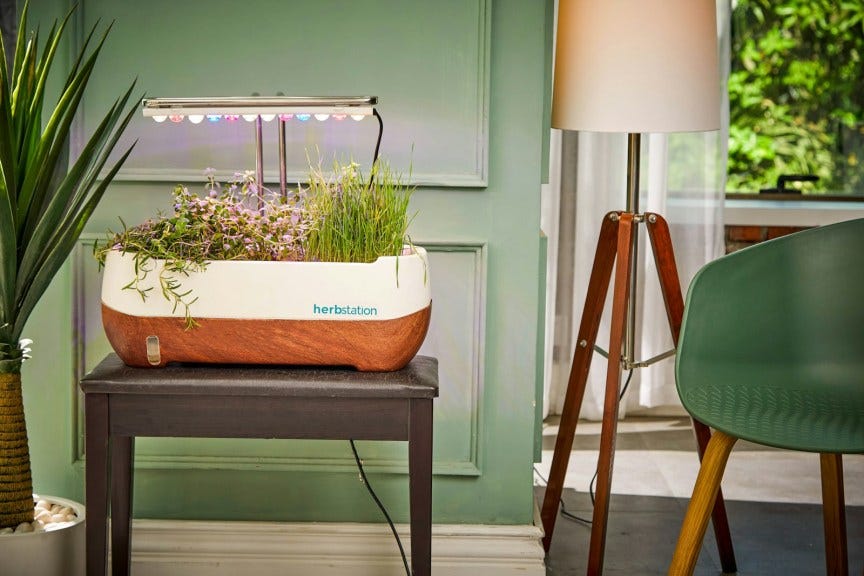
Countertop hydroponic setups are a good option if you want a system that works. A clear advantage is that many countertop systems are automated, which makes them easier for beginners. They come in different sizes, ranging from as small as a toaster to the size of a microwave. They have several pod holes for seeds, a growing light (especially useful if your windowsill is north-facing, and you are growing light-hungry herbs like basil), timers, and other useful features.
Grow lights are essential in a low-light apartment. Portable LED grow lights help here. Available in different sizes, they are easy to set up and vary from blue light, red light, and full-spectrum lights. Full-spectrum lights are preferred as they provide the right wavelengths your plants need to grow.
A vertical hydroponic garden helps you grow more plants in a small space. Instead of filling your windowsill or countertop with pots, you grow upward. These systems use water and plant nutrients instead of soil.

Start growing with the space and budget you have
Grocery prices are already taking a lot from our pockets, so it’s only realistic to start indoor gardening on a budget without too many expenses. You can begin with a few windowsill pots, seeds, or small herb plants for less than $30. For about $20 to $25, the Planters’ Choice indoor herb kit includes herb seeds, pots, plant markers, soil discs, and basic gardening tools.
For plants that need more light than a windowsill provides, try a basic full-spectrum LED grow light. Strip and clip-on options often cost $10 to $25, and some plug into a USB port or wall adapter.
For a more hands-off option, choose a hydroponic countertop system. These units come with built-in grow lights and start at around $40, depending on the number of pods. They let you grow several plants at once in a compact space.
Starting your indoor garden shouldn’t break the bank. A sunny window with a few pots and seeds works well, or you can scale up to a simple automated system when you want.
FIB fam, have you started an indoor garden, or plan to? Tell us what worked, what flopped, and what you learned in the comments.
The post Grow It Yourself: Indoor Gardening for Apartment Living first appeared on FLUENT IN BLK.
